


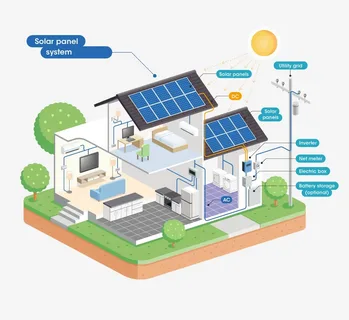
Solar energy has become one of the most popular and sustainable sources of electricity in recent years. As more homeowners and businesses seek eco-friendly solutions, understanding different types of solar power systems is essential for making informed decisions. In this article, we’ll explore the main types of solar systems, their applications, and how they work.
1. Grid-Tied Solar Power Systems
Grid-tied solar power systems are the most common type of solar installation. These systems are connected to the local utility grid, allowing you to use solar energy during the day and draw electricity from the grid at night or during cloudy days.
Advantages:
- Lower installation cost compared to off-grid systems
- Ability to sell excess electricity back to the grid (net metering)
- Minimal maintenance required
Disadvantages:
- No power supply during grid outages unless paired with a battery
- Dependent on local utility regulations
2. Off-Grid Solar Power Systems
Off-grid solar power systems operate independently of the utility grid. They are ideal for remote areas where grid access is unavailable. These systems rely on batteries to store energy for use when the sun isn’t shining.
Advantages:
- Complete energy independence
- Useful in remote locations
- Can be customized for specific energy needs
Disadvantages:
- Higher initial cost due to battery storage
- Requires regular maintenance of batteries
3. Hybrid Solar Power Systems
Hybrid solar power systems combine the benefits of grid-tied and off-grid systems. They are connected to the grid but also use batteries to store excess energy. This setup ensures continuous power supply even during grid failures.
Advantages:
- Provides energy security with battery backup
- Can reduce electricity bills by storing excess solar energy
- Flexible and scalable
Disadvantages:
- Higher installation cost
- Requires careful monitoring and maintenance
4. Concentrated Solar Power Systems (CSP)
Unlike traditional solar photovoltaic (PV) systems, concentrated solar power systems use mirrors or lenses to focus sunlight on a small area to produce heat, which then generates electricity. CSP is commonly used for large-scale energy production rather than residential purposes.
Advantages:
- Efficient for large-scale energy generation
- Can include thermal storage to supply energy after sunset
Disadvantages:
- Expensive installation and maintenance
- Not suitable for small-scale residential use
Conclusion
Understanding different types of solar power system is key for anyone considering solar energy for their home, business, or large-scale projects. Each system has its own advantages and limitations, and the right choice depends on your energy needs, budget, and location. Whether it’s a grid-tied, off-grid, hybrid, or concentrated solar power system, investing in solar technology contributes to a greener and more sustainable future.
