


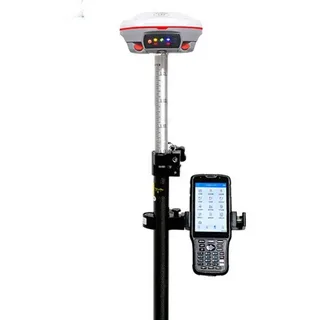
Real-Time Kinematic (RTK) GPS technology has revolutionized precision positioning, providing centimeter-level accuracy for applications ranging from agriculture to surveying and construction. However, achieving this high level of accuracy in the field depends on several critical factors. Understanding these can help users optimize rtk gps performance and avoid common pitfalls.
What is RTK GPS?
RTK GPS is a satellite-based positioning system that enhances the accuracy of standard GPS signals by using a reference station to provide real-time corrections. Unlike traditional GPS, which can have errors of several meters, RTK GPS can achieve accuracy within a few centimeters, making it essential for precision-dependent tasks.
Key Factors Affecting RTK GPS Accuracy
1. Satellite Geometry and Signal Quality
The accuracy of RTK GPS depends heavily on the number and position of satellites in view. Poor satellite geometry, often caused by obstructions such as buildings, trees, or mountains, can reduce signal strength and degrade positioning accuracy. A high number of visible satellites with optimal geometry ensures stronger signals and better RTK GPS accuracy.
2. Base Station Quality and Distance
RTK GPS relies on a base station to transmit correction data to the rover. The quality of the base station and its distance from the rover are critical. Longer distances can introduce errors due to signal degradation or atmospheric interference, reducing the overall accuracy. For optimal performance, it’s recommended to keep the rover within 10–20 kilometers of the base station.
3. Environmental Conditions
Weather and environmental factors can affect RTK GPS accuracy. Heavy rain, dense cloud cover, and ionospheric disturbances can weaken satellite signals. Similarly, urban environments with tall buildings or areas with dense foliage can cause multipath errors, where signals reflect off surfaces before reaching the receiver, leading to positioning inaccuracies.
4. Receiver Quality and Settings
Not all RTK GPS receivers are created equal. High-quality receivers with advanced algorithms can filter out noise and multipath errors more effectively than basic models. Additionally, proper configuration and firmware updates are essential to ensure the receiver functions optimally in different field conditions.
5. Communication Link Stability
RTK GPS requires a stable communication link between the base station and rover to transmit correction data. Interruptions, latency, or low bandwidth can cause positioning errors or loss of RTK fix, directly impacting accuracy in the field. Using reliable communication systems such as UHF radios, LTE networks, or GNSS networks can minimize this risk.
Tips for Optimizing RTK GPS Accuracy in the Field
- Choose a clear line of sight to the sky to maximize satellite visibility.
- Regularly calibrate and maintain both base station and rover equipment.
- Minimize the distance between the base station and rover whenever possible.
- Monitor environmental conditions and plan work during favorable weather.
- Use high-quality, modern RTK GPS receivers for best results.
Conclusion
Understanding RTK GPS Accuracy: What Affects Performance in the Field? is essential for anyone relying on precision positioning. Satellite geometry, base station distance, environmental conditions, receiver quality, and communication stability all play crucial roles in determining how accurate your RTK GPS measurements will be. By addressing these factors, field operators can maximize performance, reduce errors, and ensure reliable results for every project.
