


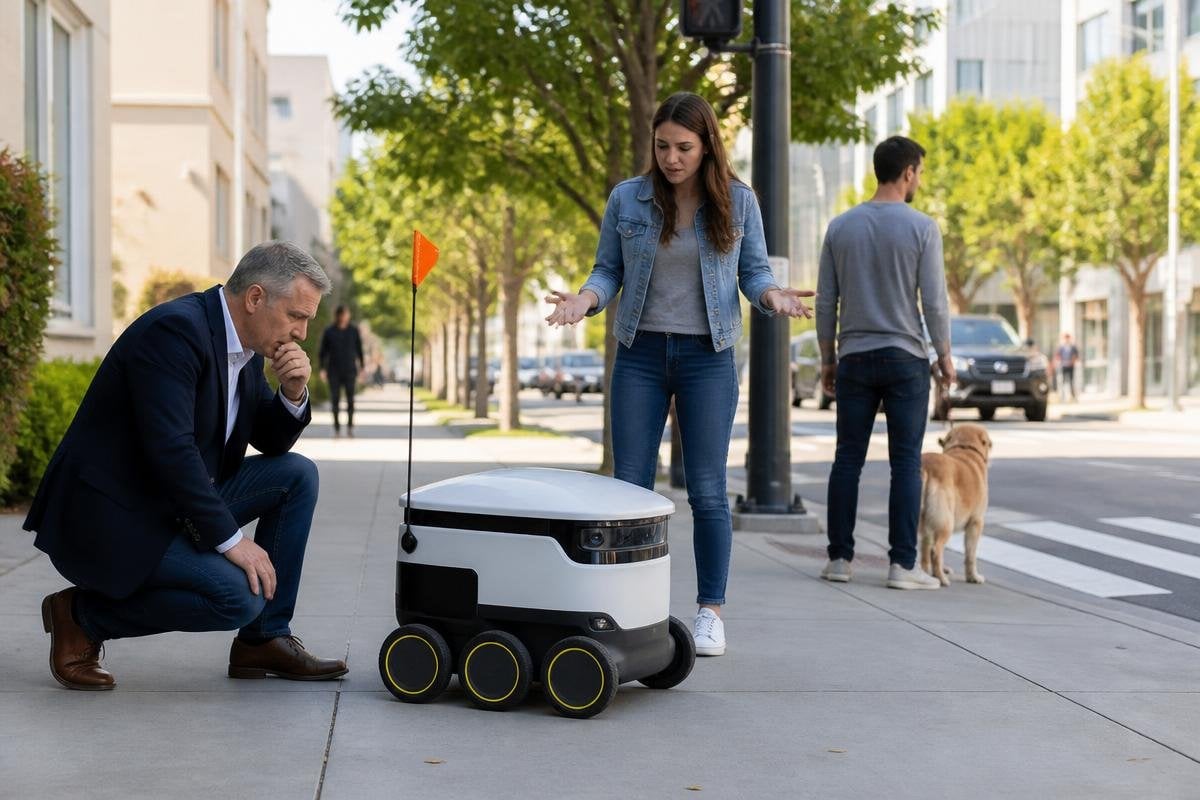
A delivery robot can block a sidewalk, hit a person, or cross a road without permission. The robot may have made the movement, but a legal case usually starts with the people and companies that chose where, how, and why it operated.
- The operator may face the first legal questions.
- Local rules can decide where the robot may travel.
- Camera logs, control records, and maintenance files can shape the case.
The machine does not carry legal responsibility
A robot has no legal address, bank account, or duty to appear in court. Responsibility usually has to be linked to a person, company, property owner, or public agency connected with the deployment.
That link depends on the event. A company may have sent the robot onto a public path. A remote operator may have taken control. A maker may have supplied software or hardware that failed during the trip. Several parties may face questions at the same time.
The first task is to identify who controlled the robot at the moment of the incident. Control can mean more than holding a joystick. It may include setting the route, approving the operating area, choosing the speed limit, or deciding how the robot should react when its sensors lose sight of an obstacle.
The rule depends on the place
A robot on a private site may face different rules from one on a public sidewalk. A robot crossing a road may fall under traffic rules, local permits, access laws, or rules for powered equipment. The same machine can face different limits after crossing a property line.
That makes the location record important. Investigators may need the route map, the approved service area, the time of the event, and any permit tied to that trip. A company that had permission to test on one street may not have had permission to use the next one.
A delivery robot outside its approved zone may turn a routine street test into a permit case. Coverage from Robot24 can place that event beside the robot’s operator, route, date, and local rule, so you can see which fact investigators may check first. The next step is what happens when the machine hits someone, blocks a path, or stops after a crash.
What happens after a crash or obstruction
The response often begins with evidence, not a debate about whether the robot is “smart.” The operator may need to preserve video, sensor data, remote-control records, software versions, route settings, and maintenance notes.
Those records can answer practical questions. Did the robot detect the person? Did it stop? Was a remote worker watching the trip? Had the company changed the software or route that day? Did a warning appear before the event, and did anyone act on it?
A delivery robot can also create several kinds of legal exposure. A person injured by the machine may seek compensation. A city may issue a fine or remove permission to operate. A company may face a claim that its safety process, training, maintenance, or route planning was poor.
The exact result depends on local law and the facts. A court or regulator may treat a design fault differently from an operator error, and a permit breach differently from an accident that followed the approved plan.
The hard case: software made the wrong choice
Software failures make responsibility harder to assign. A robot might follow a route correctly but misread a curb, fail to see a cyclist, or stop in a place that blocks access. The visible mistake happens outside the code, yet the cause may sit in testing, sensor setup, route design, or remote supervision.
That is why “the robot decided” is a poor stopping point. The useful question is who set the conditions that made the decision possible, and what checks were in place before the robot entered public space.
A company may also need to show that it knew about a failure and chose to keep operating. Repeated faults, ignored alerts, or missing maintenance records can matter more than one isolated error. This is an area where public claims need care, because a demo video rarely shows the full operating record.
A practical incident checklist
If a delivery robot breaks a rule or causes harm, the response should cover these points:
- Fix the scene: move people away from danger and record the location before conditions change.
- Save the records: preserve video, sensor logs, route files, control sessions, and software versions.
- Name the controller: identify the company, remote operator, site owner, and any outside service team.
- Check permission: compare the robot’s route and timing with the permit or local operating rule.
- Review the history: look for earlier alerts, repairs, software changes, complaints, or similar events.
The checklist does not decide liability. It gives investigators the facts needed to separate a design problem from a route choice or a failure to supervise.
What operators need to decide next
Before a robot returns to service, the operator should confirm the legal route, the human response plan, the record system, and the stop process. Those details matter because a second incident can raise harder questions about what the company knew after the first one.
I’d pause the deployment until the operator can show where the failure began and who had control at that point. The open question for many delivery fleets is not whether a robot can move safely in a test area, but whether the company can prove that its rules still apply on a busy public route.
